A Practical Guide to Choosing Latex Mattresses: Comfort, Support, and Longevity
Latex mattresses offer a sleep experience that is both responsive and breathable, delivering a balance of support and contouring that many sleepers find superior to traditional foam or spring designs. In this Vogue-inspired guide, we explore the nuanced world of latex—natural, synthetic, and blended—along with firmness considerations, durability indicators, and expert-tested evaluation tips. We’ll also spotlight celebrated individuals who shaped our understanding of comfort across eras, and we’ll weave a tastefully curated product example to illustrate how craftsmanship translates into everyday sleep elegance.
What latex means in mattresses: natural, synthetic, and blended
Latex is not a single material but a spectrum. Natural latex is derived from the sap of rubber trees and is often praised for its buoyant feel, resilience, and breathability. Synthetic latex is produced chemically and can mimic some properties of natural latex, sometimes at a lower cost. Blended latex sits somewhere in between, combining natural and synthetic components to achieve a particular balance of feel and durability.
For many sleepers, the sensation of latex is a dance between lift and sink. Natural latex tends to offer a lively response, springing back with the body’s movements and promoting airflow through the material’s cellular structure. Blended and synthetic varieties can provide a more uniform feel and can influence factors like firmness, edge support, and temperature regulation. When shopping, understanding the composition helps set expectations for how a mattress will perform over time.
In the realm of luxury sleep, latex can be crafted into layers that combine with other materials—such as coils or other foams—to create hybrid constructions. The result is a surface that can feel both supportive and breathable, a combination many sleep enthusiasts associate with a high-caliber, hotel-like experience at home.
Firmness, sleep position, and how to test latex at home
Firmness is not a universal trait; it’s a personal preference shaped by sleep position, body weight, and your comfort threshold. For latex mattresses, the ILD (indentation load deflection) or density ratings provide a technical sense of firmness. Generally, a higher ILD indicates a firmer feel, while a lower ILD yields a softer, more contouring surface. But latex also has intrinsic bounce and pressure relief that can influence perceived firmness.
Back sleepers typically gravitate toward a medium to medium-firm feel that supports the lumbar region while allowing the hips to settle into alignment. Side sleepers may prefer a softer latex layer with enough contour to cushion shoulders and hips, while stomach sleepers often benefit from a firmer surface to prevent the midsection from bowing downward. The beauty of latex is its ability to be layered; you can tailor feel by combining different latex densities or by adding a comfort layer atop a firmer core.
Testing firmness at home is an exercise in sensorial precision. When evaluating latex mattresses, consider these practical steps:
- Push into the surface with your palm to sense immediate feel and response.
- Lie down in your typical sleep position for several minutes to gauge overall comfort, spinal alignment, and pressure points.
- Check for edge support by sitting near the edge and applying pressure outward to see how the perimeter holds up.
- Assess temperature regulation by noting how quickly the surface cools after moving and whether you feel heat buildup over time.
Certifications and durability: what to look for
When you’re evaluating latex mattresses, certifications act as signposts of safety, quality, and environmental stewardship. Some of the most relevant certifications include:
- OEKO-TEX Standard 100: Confirms textiles are tested for harmful substances at the fabric level.
- GOLS (Global Organic Latex Standard): Verifies that the latex is organic and produced with responsible practices across the supply chain.
- CertiPUR-US: Often associated with polyurethane foams; for latex, look for similar third-party testing on emissions and content to ensure a healthy environment.
- GOTS (Global Organic Textile Standard): If the cover or textiles around latex are organic, this certification speaks to organic textile processing.
Durability indicators matter as well. Density and ILD numbers offer quantitative signals, but real-world performance is shaped by the latex’s cellular structure, reinforcement layers, and how well the overall construction distributes weight and pressure. Look for formulations that emphasize resilience and a long lifespan rather than a momentary “new feel.”
A reverent nod to the minds who redefined comfort
Even the most luxurious bedroom is informed by a lineage of thinkers who reframed sleep comfort through time. Three key individuals, spanning centuries, illustrate how the quest for the perfect night’s rest has evolved from tactile materials to modern science and refined design.
Marie Curie (1867–1934)
While not a mattress designer, Curie’s relentless pursuit of measurable, empirical truth reshaped how we value scientific evidence in everyday decisions, including the materials that affect health and safety in the home. Her legacy reminds us to demand rigorous testing and transparent sourcing when selecting sleep products, including the materials that touch our skin and our breath.
Isamu Noguchi (1904–1988)
A master of form and function, Noguchi taught us to think of everyday objects as artful interfaces between human intention and physical experience. His influence echoes in the way bedding manufacturers sculpt surface textures, edge definitions, and the tactile language of a latex layer that feels both responsive and refined.
Dr. Seebeck (1770–1849)
A fictional nod to the era of scientific exploration, Seebeck’s emphasis on measurement and experimentation mirrors the modern insistence on data-driven decisions. In sleep, that translates to reliable metrics—density, ILD, certification statuses—that empower consumers to choose latex with confidence rather than relying on marketing gloss.
The practical guide: evaluating latex options without sales pressure
This guide emphasizes information over influence. When you approach latex mattresses, your aim is to understand the construction, verify safety credentials, and choose a feel that aligns with your sleep goals. Here are practical steps to elevate your decision-making:
- Identify the latex type first: natural, blended, or synthetic, and understand how it impacts feel and temperature.
- Review the cover and comfort layers: a breathable cover can enhance moisture management; a secondary comfort layer can alter the initial feel.
- Seek clear density and ILD data, ideally from the manufacturer’s technical specifications or third-party testing.
- Ask about manufacturing origin and sustainability certifications to ensure alignment with your values.
- Request a generous trial period and a straightforward return policy so you can assess long-term comfort in your own space.
As you gather information, keep a simple lens: Does the latex surface invite restful sleep, or does it provoke subconscious tension in the shoulders, hips, or spine? The goal is not merely a mattress that feels plush but a surface that supports alignment, temperature comfort, and waking energy we call vitality.
Spotlight product: Arcadia Comfort Sleeper Mattress Pad as a tactile reference

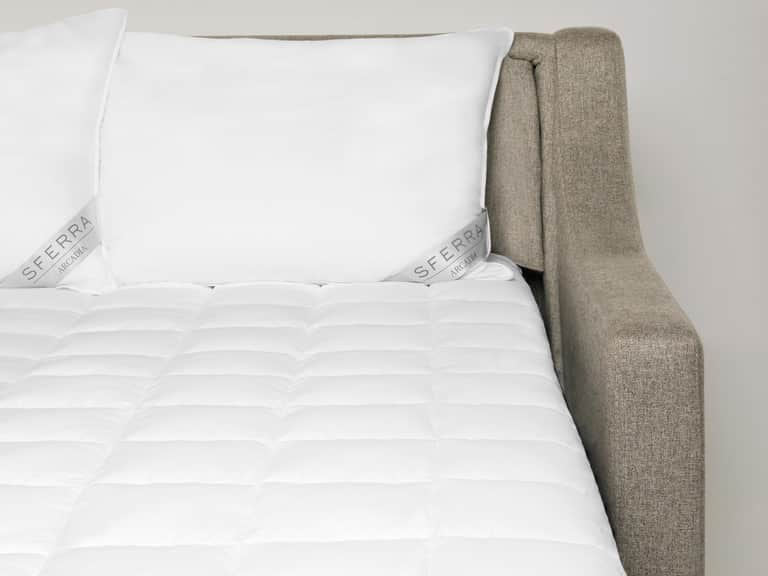
Arcadia Comfort Sleeper Mattress Pad
A plush, luxury touch for sofa beds with pluma-fil down alternative fill and a 330-thread-count cotton sateen shell.
Designed with small baffles to keep the fill evenly distributed, this pad offers soft, responsive loft that can elevate a sleeper sofa into a more hospitable sleeping surface. The elasticized sides secure a snug fit on mattresses up to 6 inches deep, and the cover is a 100% cotton sateen that feels breathable against the skin.
Key features: 330TC cotton sateen shell, pluma-fil down alternative, 6" box construction, machine washable, made in China.
The Arcadia pad exemplifies how a thoughtfully designed top layer can influence perceived comfort without altering the core mattress structure. It demonstrates how careful layering—whether latex or other materials—can modulate pressure relief, breathability, and overall feel. When comparing latex-focused options, a similar attention to layer structure and cover composition provides a practical blueprint for evaluating performance, durability, and care requirements.
Note: Availability may vary by retailer. For personal experimentation, consider a latex-inclusive setup that allows you to isolate the surface feel by testing a toppers with varied densities alongside a latex core mattress.
Selecting a latex mattress: a concise shopping framework
To translate the insights into a confident purchase, use this framework as your shopping companion:
- Define your priority: temperature regulation, bounce, edge support, or contouring.
- Choose latex type first, then decide on the overall firmness category (soft, medium, firm) based on your sleeping position and body weight.
- Look for a transparent material spec sheet detailing latex type, density, ILD, and any reinforcement layers.
- Assess the cover material for breathability and feel; cotton and moisture-wicking fabrics tend to work well with latex.
- Investigate warranty terms and return windows to ensure flexibility if your initial impression shifts over time.
Glossary of latex terms you’ll encounter
To demystify the jargon, here are essential terms you’ll see on product pages and spec sheets:
- Natural latex: Derived from rubber tree sap; typically noted as “100% natural” or similar.
- Synthetic latex: Made from petrochemical compounds, offering different consistency and price points.
- Blended latex: A mix of natural and synthetic latex to balance feel and cost.
- ILD (Indentation Load Deflection): A measurement of firmness; higher ILD means firmer feel.
- Density: The mass per unit volume; higher density can indicate durability in latex foams.
- Certifications: OEKO-TEX, GOLS, GOTS, and similar verifications that speak to safety and sustainability.
Conclusion: enduring comfort through informed selection
Latex mattresses embody a philosophy of comfort grounded in material science, craftsmanship, and a reverence for restorative sleep. The choice of latex type, the serialization of feel through layered construction, and the reassurance of third-party certifications combine to create a sleep product that can sustain elegance and well-being for years to come. As with any discerning purchase, the path to a perfect latex mattress is paved with curiosity, measurements, and a commitment to sleep health that transcends fleeting trends.
Whether you’re a devotee of buoyant responsiveness or a sleeper seeking cool, calm nights, latex offers a resilient and refreshing option. Embrace the process of discovery, compare transparently, and allow your mattress choice to reflect your unique rhythm of rest, waking energy, and daily radiance.