Bedding & sleep education
Dunlop Latex: A Guide to Feel, Materials, and Certifications
Resilient, buoyant, and available in a surprising range of feels, Dunlop latex is a material worth understanding beyond its name. Here’s how its construction, firmness, companion layers, and certifications can help you assess a mattress with a more discerning eye.
Dunlop latex has a particular presence in the mattress world: springy rather than sluggish, substantial without necessarily feeling hard, and often chosen as the supportive heart of a natural or organic sleep surface. Yet “Dunlop” is not a firmness rating, and “latex” alone does not tell you exactly what a mattress is made from. The finished feel depends on the latex formulation, the way it is processed, the density and thickness of each layer, and what surrounds it.
For shoppers, that distinction matters. Two mattresses can both contain Dunlop latex and feel quite different beneath the body. A soft upper layer over a firmer core may welcome the shoulders and hips while maintaining support underneath; a single firm slab may feel more uniform. Wool and cotton can change the surface, breathability, and care routine, while certifications provide a framework for checking certain material claims.
This guide explains what Dunlop latex is, what its characteristic feel can and cannot tell you, and how to read descriptions of natural, organic, and certified materials. The aim is not to crown one construction as universally best. It is to help you ask better questions and compare like with like.
What is Dunlop latex?
Latex foam is made by turning liquid latex into a cellular, resilient material. Dunlop refers to a method of producing that foam. In broad terms, latex is whipped into a foam, placed into a mold, and heated so the material sets. The resulting layer is then washed and dried. Details vary by manufacturer, but the finished product is a flexible foam with a distinctive elastic response.
Latex used in bedding may come from rubber-tree sap, synthetic ingredients, or a blend. The word “latex” by itself does not establish the source or the percentage of each ingredient. Product descriptions should identify whether the material is natural, synthetic, or blended—and, where relevant, whether it is certified organic. If that information is absent, it is reasonable to ask the manufacturer for a material breakdown.
Dunlop latex is commonly used in mattress cores and comfort layers. Its resilience means it tends to push back as the sleeper moves, rather than slowly compressing and recovering in the way some foams do. That quality can feel buoyant and responsive. It is not a guarantee of any particular level of softness: latex can be produced in different firmnesses, and the other layers in a mattress influence the sensation of the whole bed.
How Dunlop and Talalay differ
Dunlop and Talalay are two different latex-processing methods. Their names describe manufacturing approaches, not a simple soft-versus-firm ranking. Talalay production includes additional steps that introduce more air and can create a more uniform foam structure. Dunlop foam is often described as having a denser or more grounded feel, while Talalay is frequently associated with a lighter, more buoyant sensation. These are broad impressions, not rules that apply to every product.
Comfort depends on more than the process. A soft Dunlop layer may feel more yielding than a firm Talalay layer; a thick comfort layer can behave differently from a thin one; and a wool quilt or cotton cover can soften, buffer, or otherwise alter the first impression. A useful comparison therefore considers the layer’s firmness, thickness, placement, and composition—not just whether the label says Dunlop or Talalay.
Some mattresses combine the two. A maker may use one type in the comfort layer and another below it, or offer a choice of materials in a customizable design. When comparing options, ask which layer uses which process and whether that arrangement can be changed. This is especially useful if the description uses phrases such as “latex feel” without explaining the internal construction.
Understanding feel, firmness, and support
Firmness is the immediate sensation of a sleep surface; support is how the mattress holds the body in a position that feels comfortable and sustainable. The terms are related, but they are not interchangeable. A mattress can feel plush at the surface while providing a firmer foundation beneath it. Conversely, an evenly firm surface may not feel comfortable to every person, even if its materials are durable.
Latex firmness is sometimes described using an ILD or IFD value, a measure associated with the force required to compress a sample by a specified amount. It can be a helpful point of comparison when the same test method and conditions are used. It should not be treated as a universal consumer score: measurements, sample dimensions, and testing practices may differ, and a single number does not capture the feel of an assembled mattress.
Body weight, sleeping position, personal preference, and the mattress base all affect how a layer feels in use. Side sleepers may prefer enough surface give to reduce pressure around the shoulders and hips. Back and stomach sleepers often pay close attention to whether their middle feels adequately supported. These are starting points rather than prescriptions; people with the same sleep position can prefer different firmnesses.
When possible, test a mattress in your usual sleeping position and give yourself enough time to settle into it. Notice whether you feel balanced, whether pressure builds at contact points, and whether changing position feels easy. A quick sit on the edge or a few seconds lying on your back rarely reveals the full experience. For online purchases, review the trial terms, layer-exchange rules, and return costs before ordering.
How layers shape the finished mattress
A mattress is a composition, not a single ingredient. A latex core may be paired with additional latex layers, a quilted cover, wool, cotton, or other materials. Each component contributes something different: latex supplies resilient foam; a cover provides the immediate textile contact; and an insulating or cushioning layer can influence the surface feel and temperature experience.
Wool is often used as a batting or barrier layer. It can absorb and release moisture and can contribute to a softer, more textured surface, though it does not make every mattress cool in every bedroom. Cotton is commonly used in covers and quilted panels. Its feel and performance depend on the weave, thickness, and construction. A mattress with natural fibers is not automatically a perfect match for every climate, allergy concern, or care preference.
Layer thickness matters as much as the material name. A two-inch latex comfort layer behaves differently from a six-inch latex core. A topper can also change how a mattress feels without changing its underlying support structure. Before choosing a configuration, check whether the listed thickness refers to the entire mattress or one component, and find out whether the cover is removable, washable, or intended for spot cleaning only.
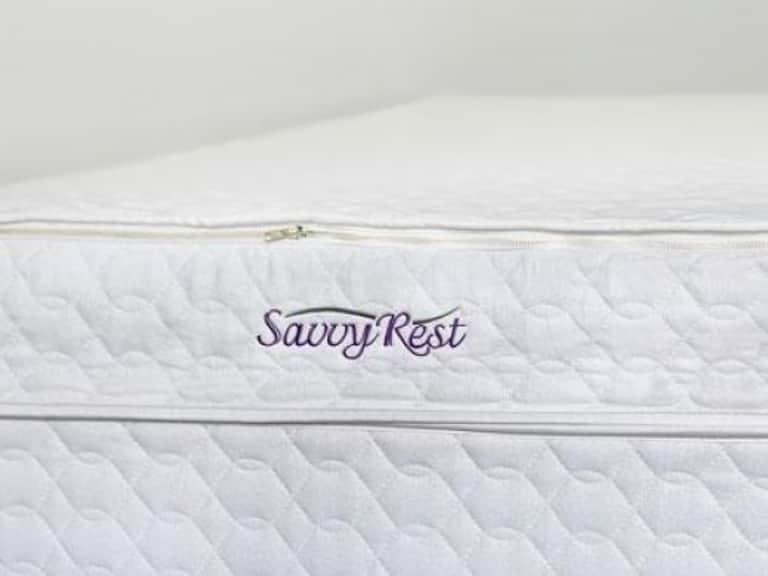
For a concrete illustration of a layered construction, the Savvy Rest Tranquility Latex Mattress is described as a seven-inch mattress with two three-inch layers, with choices that include Dunlop, Talalay, or a combination. Its description also identifies organic cotton in the cover and organic wool in the flame barrier. This example is useful for understanding how a product can specify both the latex layers and the surrounding materials; the exact configuration and any certification documentation should always be confirmed directly with the manufacturer.
Natural, organic, and certified: what the words mean
“Natural,” “organic,” and “certified” are not synonyms. Natural latex generally refers to latex derived from rubber-tree sap, but the term alone does not establish that the final foam is made entirely from natural material. Manufacturing formulations may include additives, and product language can differ. Look for a clear description of the latex composition rather than relying on a broad adjective.
Organic describes agricultural production under a defined standard. In a mattress context, that claim may refer to a particular component—such as latex, wool, or cotton—not necessarily every part of the finished product. A mattress can contain certified organic materials alongside components that are not certified organic. The scope of the claim is therefore essential: ask which material is certified, to which standard, and whether the certification applies to the product, the component, or the supply chain stage.
GOLS, the Global Organic Latex Standard, is a certification associated with organic latex. When a product claims GOLS-certified organic latex, look for documentation that identifies the certified material and the organization responsible for certification. A logo or phrase on a product page is a useful starting point, but transparent documentation is better. Certification should not be read as a blanket guarantee about every feature of a mattress, such as comfort, longevity, or suitability for a particular sleeper.
Other standards may address different materials or stages of production. GOTS is associated with organic textile processing and may be relevant to cotton or wool components. A textile safety certification, meanwhile, does not necessarily establish that the latex itself is organic. Read the scope of each standard carefully and distinguish certifications of raw material, finished component, and finished product.
It is also wise to separate material certification from health claims. A certification can provide evidence that a material meets a defined set of requirements, but it does not mean a mattress will prevent or treat a health condition. If you have a latex allergy, asthma, chemical sensitivity, or another medical concern, speak with a qualified health professional and contact the manufacturer about the product’s specific materials and construction. “Natural” should not be used as a substitute for personal medical advice.
Questions to ask when comparing Dunlop latex
- What is the latex made from? Ask whether it is natural, synthetic, or blended, and whether the manufacturer can provide a composition statement.
- Which layers are Dunlop? Confirm how many latex layers the mattress contains, their thickness, and where each sits in the construction.
- How is firmness described? Request the maker’s firmness guidance, and treat ILD or IFD figures as comparative information rather than a universal comfort rating.
- What does the certification cover? Check whether GOLS applies to the latex itself and whether separate standards apply to cotton, wool, or other textiles.
- What else is in the mattress? Ask about the cover, batting, adhesives, barriers, and any other materials that may affect feel or care.
- How should it be maintained? Find out whether the cover is removable, how spills should be handled, and whether the mattress needs a particular type of foundation.
- What are the trial and exchange terms? Review the time frame, fees, and process for changing a layer or returning the mattress.
Care, durability, and the bed base
Latex is often chosen for its resilience, but durability depends on the complete product: material quality, layer design, use, and care all play a part. A warranty is useful to review, yet it is not a prediction of exactly how long a mattress will feel comfortable. Read what the warranty covers, what it excludes, and whether the required foundation or maintenance practices affect coverage.
Support the mattress on a base that meets the manufacturer’s specifications. Some latex mattresses require a solid, properly ventilated platform or closely spaced slats; others may be compatible with adjustable bases. The correct setup is product-specific. An unsuitable foundation can affect performance and may contribute to uneven wear, so check the requirements before installation rather than assuming one bed frame works for every mattress.
Care instructions deserve equal attention. Latex cores are not generally treated like ordinary bedding, and many mattress covers are not designed for machine washing or dry cleaning. Use a protector if recommended, address spills promptly according to the manufacturer’s guidance, and avoid soaking the core. If a cover is removable, confirm whether “removable” means washable; those terms do not always mean the same thing.
Is Dunlop latex right for you?
Dunlop latex may appeal to sleepers who enjoy a responsive, buoyant surface and want a mattress with clearly described layers. Its range of available firmnesses makes it possible to build very different sleep experiences from the same broad material category. Some shoppers also value traceable sourcing and third-party certification, but those priorities are best served by reviewing specific documentation rather than relying on a label alone.
It may be less compelling for someone who prefers the slow, enveloping sensation of a memory foam or who is shopping primarily by price. Latex mattresses can involve a higher initial cost, and the heavier material may be less convenient to move. Individual preferences, bedroom conditions, allergies, and care needs all deserve a place in the decision.
The most useful approach is to compare complete constructions. Note the number and thickness of layers, the firmness information provided, the materials in the cover and barrier, the certification scope, and the terms for testing or exchange. If you can try the mattress, focus on how your body feels over time rather than on the label’s promise. If you cannot, look for a clear, detailed description and a return policy that makes an informed trial possible.
The considered choice
Dunlop latex is neither a magic word nor a single, uniform feel. It is a foam-making method used in layers that can be soft, firm, or somewhere between, and its performance depends on the way those layers are assembled. Wool, cotton, and other materials further shape the finished sleep surface, while certifications can help substantiate specific sourcing and processing claims when their scope is clearly stated.
In a crowded marketplace of broad promises, precision is quietly luxurious. Ask what is inside, how it is made, what each certification actually covers, and how the mattress should be cared for. With those details in hand, you can move beyond marketing shorthand and choose a sleep surface that reflects your own comfort preferences, practical needs, and material priorities.